Defining the NEAR BOS Strategy
The term "NEAR BOS" collides two distinct crypto vocabularies. You must untangle whether the discussion centers on infrastructure development or technical trading signals. Confusing the two leads to misaligned strategies, as one builds the platform while the other trades the price action on it.
The Infrastructure Layer: Blockchain Operating System
On the protocol level, NEAR introduced the Blockchain Operating System (BOS) as a unified layer for discovering and interacting with decentralized applications. It functions like a standard operating system on your computer, providing the necessary tools for developers to build and for users to browse open web experiences across multiple chains. This initiative aims to reduce fragmentation by creating a common interface for the decentralized web.
For developers, the BOS simplifies deployment and user acquisition. For the broader ecosystem, it represents a move toward interoperability and ease of use, allowing NEAR to compete not just on speed, but on user experience. It is a structural upgrade to how the network operates, rather than a metric for its financial performance.
The Trading Signal: Break of Structure
Conversely, in the realm of technical analysis, BOS stands for Break of Structure. This is a specific chart pattern that signals a potential shift in market momentum. Traders look for price to close above a previous swing high in an uptrend (bullish BOS) or below a previous swing low in a downtrend (bearish BOS).
This concept is not unique to NEAR; it applies to all liquid assets. However, when traders discuss "NEAR BOS," they are often referring to price action analysis on NEAR Protocol tokens. Understanding this distinction is critical because a bullish infrastructure announcement (NEAR BOS) does not automatically trigger a bullish technical breakout (BOS).
NEAR Protocol's Blockchain Operating System
Think of the NEAR Blockchain Operating System (BOS) as the bridge between raw code and everyday users. For developers, it removes the friction of building in isolated silos. Instead of creating a standalone app that feels disconnected from the rest of the web, the BOS allows them to build modular components that plug directly into a shared, open interface.
This infrastructure shift is strategic because it treats blockchain interactions like standard web pages. Users can browse, discover, and interact with decentralized applications (dApps) without needing to understand wallet connections, gas fees, or chain switching. It simplifies the user experience to the point where the underlying complexity becomes invisible.
For long-term holders, this means NEAR is positioning itself as the foundational layer for mass adoption. By prioritizing interoperability and ease of use, the BOS attracts developers who want to reach mainstream audiences rather than just crypto natives. This focus on utility over speculation builds a more resilient ecosystem.
Break of Structure in crypto trading
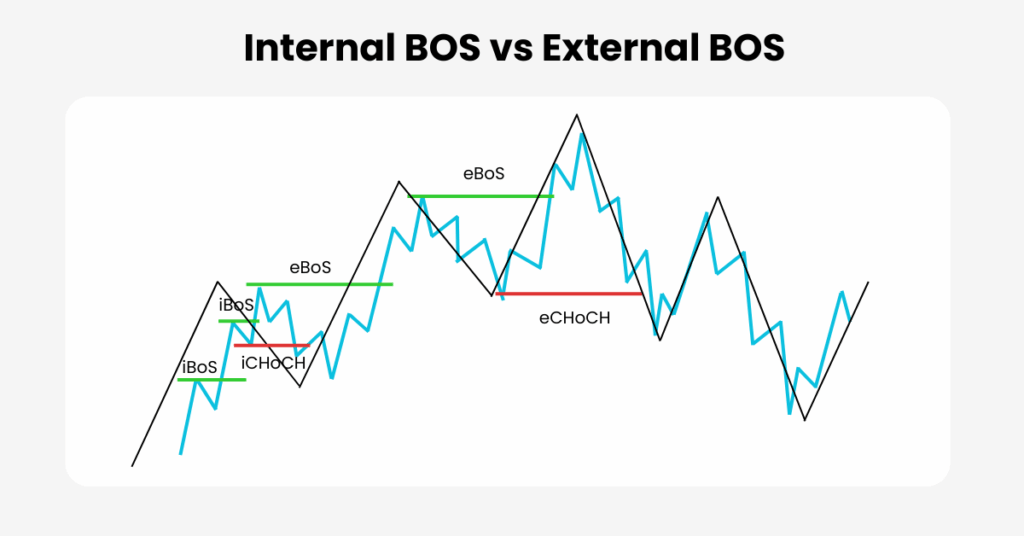
A Break of Structure (BoS) is a price action signal that confirms a trend is continuing. In an uptrend, this happens when price closes above the previous swing high. In a downtrend, it occurs when price closes below the last swing low. This pattern tells traders that the dominant momentum is still in control, offering a high-probability entry point for trend-following strategies.
Think of market structure like a staircase. As long as buyers keep pushing price above the previous step (swing high), the uptrend remains intact. A BoS is simply the moment price clears that next step, validating that the climb is ongoing rather than a temporary spike. For crypto traders, who often face volatile, choppy markets, identifying these clear continuations helps filter out noise and avoid entering trades against the primary flow.
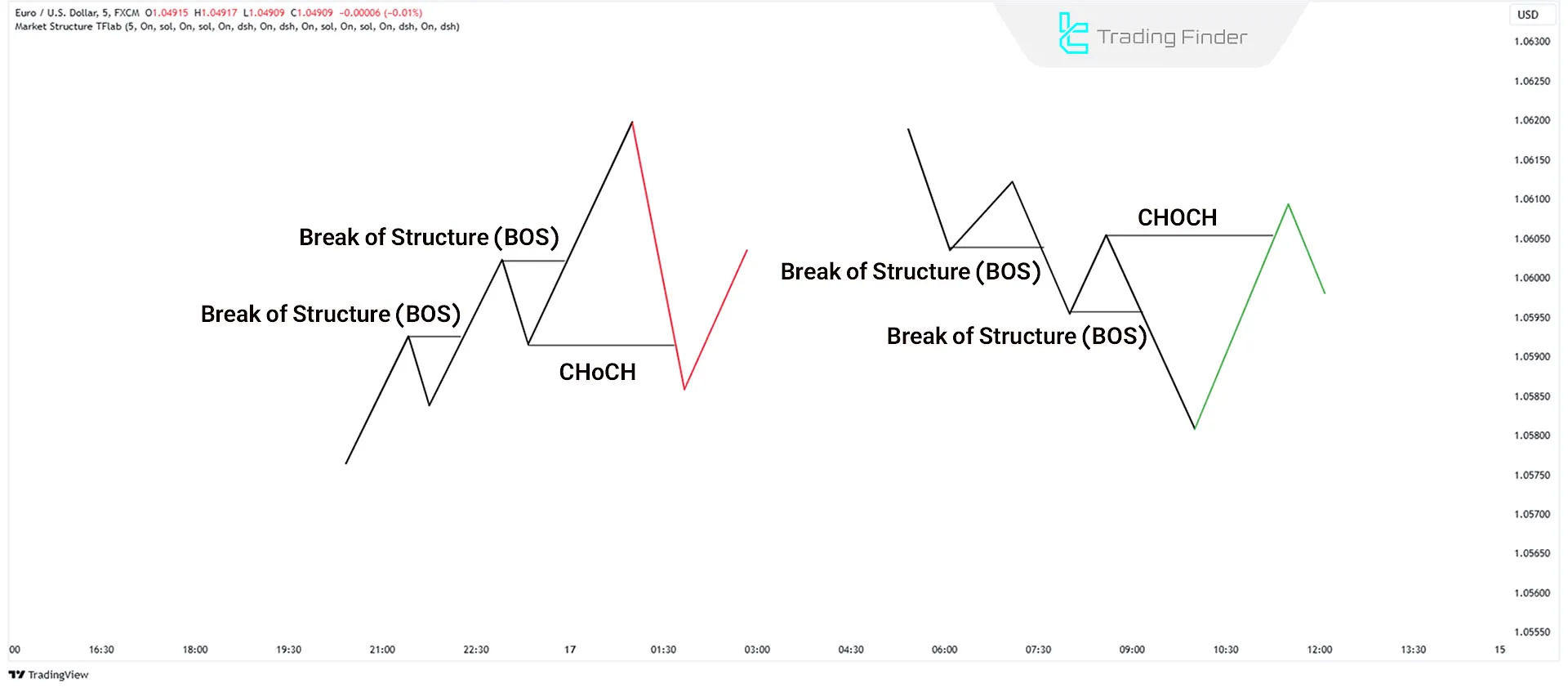
To apply this in practice, you need to wait for a confirmed candle close. A wick piercing a swing high is not a BoS; it is often a liquidity grab. Only when the candle body closes beyond the level does the structure break, signaling that new participants are stepping in at higher (or lower) prices. This confirmation reduces the risk of false signals, which are common in the fast-moving crypto environment.
Infrastructure vs. Trading Signals
When you see "BOS" in crypto discussions, it refers to two completely different things. One is a technical framework for building apps on NEAR Protocol. The other is a chart pattern used by traders to spot trend reversals. Confusing the two can lead to costly mistakes, whether you are deploying code or executing a trade.
The NEAR BOS (Blockchain Operating System) is infrastructure. It is a set of tools that allows developers to build decentralized applications that work across different blockchains. It focuses on usability, speed, and interoperability. If you are a developer, this is your toolkit. If you are an investor, this represents the long-term value of the network's adoption.
In contrast, Break of Structure (BoS) is a trading signal. It is a technical analysis concept where price breaks a previous high or low, signaling that the current trend is continuing. This is short-term, speculative, and focused on market psychology. It has nothing to do with the underlying technology of the NEAR blockchain.
To help you decide which path aligns with your goals, here is a direct comparison of the two concepts.
| Criterion | NEAR BOS (Infrastructure) | BoS (Trading Signal) |
|---|---|---|
| Primary Goal | Building interoperable apps | Spotting trend continuations |
| Time Horizon | Long-term (months/years) | Short-term (minutes/hours) |
| Key Users | Developers, Builders | Traders, Analysts |
| Risk Profile | Adoption and tech risk | Market volatility risk |
| Success Metric | Active users, TVL | Profit/Loss ratio |
The choice depends on your involvement. If you are building or holding for the long term, focus on the infrastructure. If you are trading, look for the signals. Both are valid, but they require different skill sets.
Building a hybrid NEAR BOS approach
The NEAR ecosystem offers a unique intersection of infrastructure and market mechanics. By combining NEAR’s role as a Blockchain Operating System (BOS) with Break of Structure (BoS) trading signals, you can align long-term network health with precise entry and exit timing. This hybrid strategy treats the protocol’s growth as the foundation and price action as the trigger.
Step 1: Monitor NEAR ecosystem growth as the foundation
NEAR’s BOS framework simplifies decentralized development, creating a robust environment for dApps and user adoption. Track on-chain metrics like daily active addresses and transaction volume. Strong infrastructure growth often precedes significant price movements, providing the macro context for your trades.
NEAR’s Blockchain Operating System (BOS) has the potential to revolutionize Web3 by simplifying decentralized development and user adoption. When the underlying network sees increased developer activity and user engagement, it signals a healthy ecosystem. This fundamental strength is your first indicator that the asset is undervalued relative to its utility.
Step 2: Identify BoS signals for entry timing
A Break of Structure (BoS) occurs when price moves beyond a previous significant high or low, indicating a shift in market momentum. Use technical analysis tools to identify these breaks on NEAR/USDT or NEAR/BTC pairs. A confirmed BoS suggests that the current trend is strengthening, offering a precise moment to enter a position.
Understanding context is key when trading market structure. A break of structure confirms that buyers or sellers have taken control. Wait for a clear break above a previous resistance level (for longs) or below a support level (for shorts). This technical signal provides the timing edge that fundamental analysis alone cannot offer.
Step 3: Manage risk with network health checks
Never trade in isolation. Always cross-reference your BoS signals with NEAR’s network health. If the ecosystem is experiencing outages or declining usage, even a strong technical signal may fail. Set stop-losses based on recent structural lows and adjust position sizes according to overall market volatility.
Risk management is the bridge between infrastructure and trading. If network metrics deteriorate while a BoS signal appears, reduce position size or wait for confirmation. Always define your exit strategy before entering. A hybrid approach requires you to respect both the code and the chart.
Helpful gear
Use these product recommendations as a starting point, then choose the size, material, and price point that fit how you actually use the gear.


![The Crypto Millionaire Bible: [5 in 1] How to Easily Make Life-Changing Money in The Next Big 2025-2026 Bull Run with Smart Investing and Trading Any Cryptocurrency (Altcoins, Meme, NFT, Airdrops)](https://m.media-amazon.com/images/I/61K1jz+cWtL._AC_UL960_QL65_.jpg)
As an Amazon Associate, we may earn from qualifying purchases.
No comments yet. Be the first to share your thoughts!