What NEAR BOS Crypto Infrastructure Actually Is
NEAR BOS Crypto infrastructure is the foundational layer for the agent economy. It is not merely another blockchain layer 1 (L1) competing for transaction volume. Instead, it functions as the operating system that powers secure, composable front-ends across decentralized applications. While traditional L1 narratives focus on throughput and tokenomics, NEAR’s approach centers on enabling developers to build and deploy complex, user-facing interfaces that interact seamlessly with various blockchain protocols.
The Blockchain Operating System (BOS) was introduced to onboard the next billion users into Web3 by simplifying the development process. It combines cross-chain execution, confidential settlement, and private inference into a single, cohesive environment. This architecture allows agents—autonomous software entities—to operate securely within a defined harness, managing their own keys and interactions without exposing sensitive data. By decoupling the front-end experience from the underlying chain mechanics, NEAR BOS ensures that applications remain resilient and adaptable as the ecosystem evolves.
NEAR BOS is not just a chain; it is the operating system enabling secure, composable front-ends across the agent economy.
This distinction is critical for understanding NEAR’s value proposition in 2026. The infrastructure supports high-frequency interactions required by AI agents, leveraging NEAR Protocol’s fully sharded, quantum-adaptive design. With maintained 100% uptime on mainnet for over five years, the network provides the stability necessary for financial and autonomous applications. The result is an environment where developers can focus on innovation rather than infrastructure fragmentation, creating a more robust and accessible Web3 landscape.
For more details on the BOS architecture, visit near.org.
NEAR BOS Crypto Infrastructure Stack
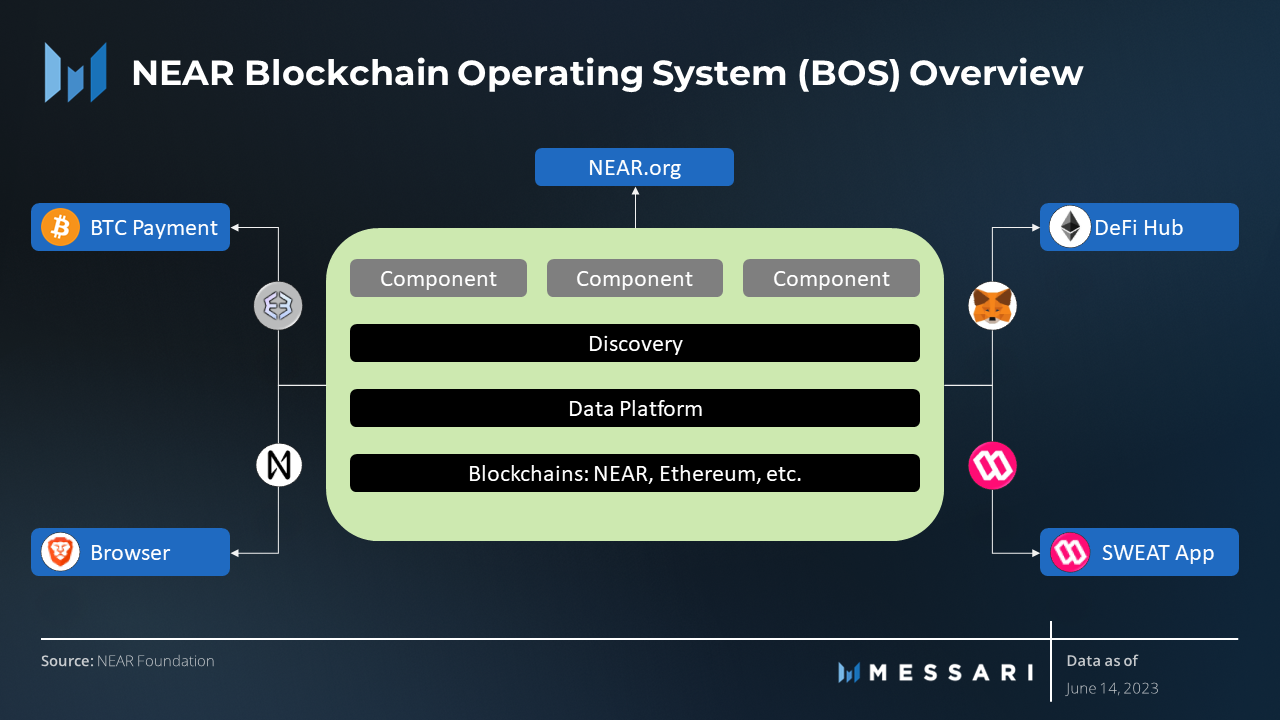
NEAR BOS Crypto Infrastructure functions as the operating system for the NEAR ecosystem, abstracting away the complexity of blockchain development. Rather than treating the blockchain merely as a ledger, NEAR treats it as a platform for building full-stack decentralized applications. This architecture relies on three distinct pillars: Gateways, Components, and Blockchains.
Gateways and Components
The Gateway acts as the entry point for developers, providing the infrastructure needed to host and serve decentralized front-ends. It handles the heavy lifting of content delivery, allowing developers to focus on logic rather than server maintenance. Components are the reusable building blocks—smart contract wrappers and UI elements—that developers can drop into their applications. This modular approach speeds up development cycles significantly, enabling rapid iteration without reinventing the wheel for every new project.
Blockchains and Sharding
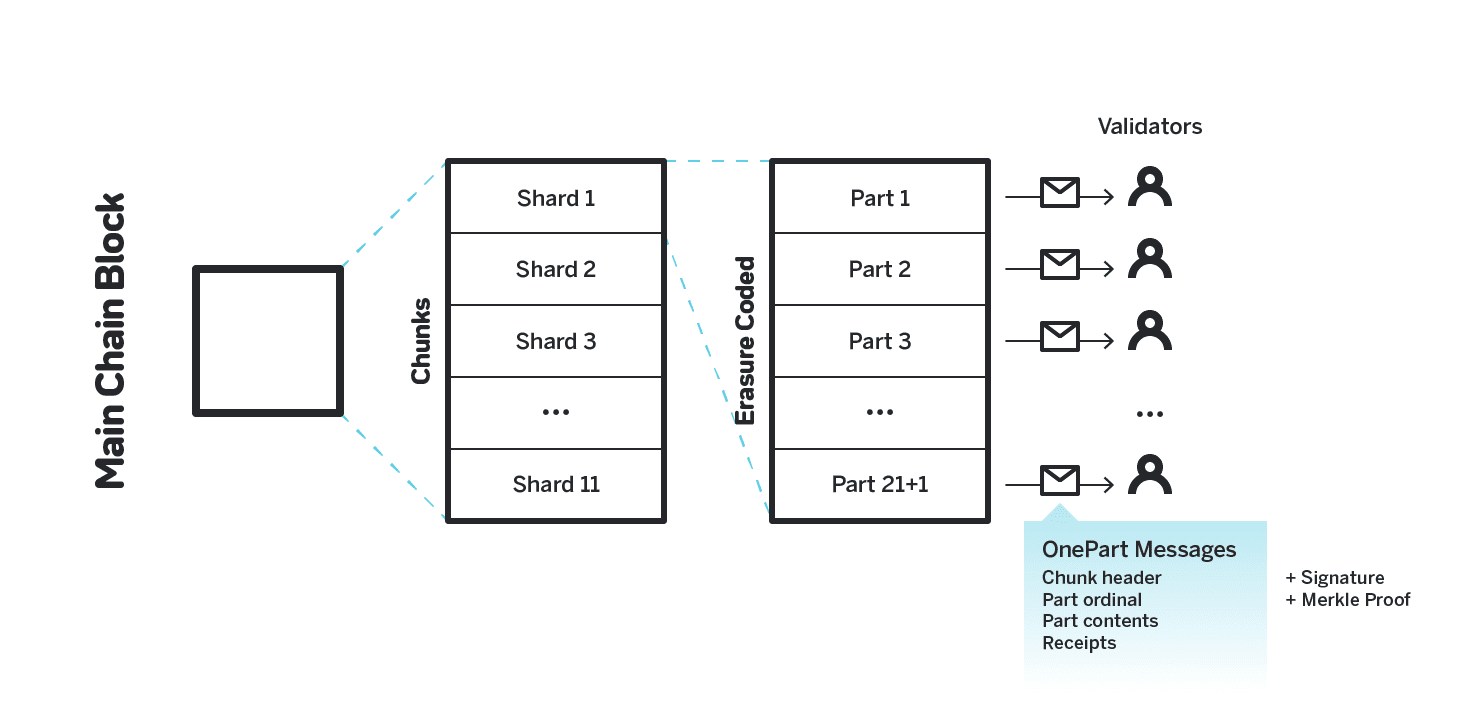
At the core lies the Blockchain layer, powered by NEAR Protocol’s Nightshade sharding technology. This allows the network to process transactions in parallel, achieving high throughput and sub-second finality. The blockchain layer ensures that the data and state managed by the gateways and components remain secure and decentralized. By combining these layers, NEAR BOS Crypto Infrastructure creates a cohesive environment where high-performance computing meets robust security.
| Layer | Primary Function | Developer Benefit |
|---|---|---|
| Gateway | Hosts and serves dApp front-ends | Eliminates need for custom server infrastructure |
| Components | Provides reusable UI and contract wrappers | Accelerates development with plug-and-play modules |
| Blockchain | Manages state, security, and consensus | Ensures scalability through sharding and high TPS |
Settlement Layer for the Agent Economy
NEAR Protocol is positioning itself as the settlement layer for the emerging agent economy. Rather than relying on generic blockchain templates, NEAR builds specialized infrastructure designed for autonomous economic activity. This approach treats AI agents not as passive observers, but as active economic participants requiring secure, high-throughput settlement rails.
The core of this strategy is the Blockchain Operating System (BOS). BOS provides the foundational layer where developers can deploy secure, decentralized front-end applications that interact seamlessly with various blockchain protocols. This abstraction allows AI agents to execute complex cross-chain actions without managing the underlying cryptographic complexity manually. By standardizing these interactions, BOS reduces the friction typically associated with machine-to-machine transactions.
NEAR’s infrastructure combines cross-chain execution with confidential settlement and private inference. This triad ensures that agents can operate with both visibility and privacy. Cross-chain execution allows agents to move value across different networks, while confidential settlement protects the sensitive data involved in high-stakes financial decisions. Private inference ensures that the AI models themselves remain secure, preventing data leakage during the decision-making process.
The result is a secure agent harness that supports massive scale. NEAR Protocol’s fully sharded architecture maintains 100% uptime on mainnet for over five years, supporting up to 1 million transactions per second with 600ms blocks. This performance is critical for the agent economy, where millions of micro-transactions occur in milliseconds. The network’s quantum-adaptive design further future-proofs these economic interactions against emerging computational threats.
Technical Tools for NEAR Developers
Building on the NEAR BOS Crypto Infrastructure requires a specific set of tools that prioritize speed and modularity. Unlike traditional monolithic chains, NEAR’s sharded architecture demands development frameworks that can handle high-throughput transactions without sacrificing security. The ecosystem provides a unified environment where developers can deploy smart contracts and decentralized front-ends with minimal friction.
The core of this infrastructure is the NEAR SDK, which supports multiple programming languages including Rust and JavaScript/TypeScript. This flexibility allows teams to choose the right tool for their specific use case, whether it’s high-performance contract logic or rapid front-end iteration. The BOS acts as the operating system layer, managing the interaction between the underlying blockchain state and the user interface.
For those looking to test deployments, the NEAR testnet and local development nodes offer a robust sandbox. These environments mirror mainnet conditions, ensuring that code behaves predictably before going live. The integration with standard web3 tools like MetaMask and WalletConnect further simplifies the user onboarding process, making the infrastructure accessible to a broader range of developers.
Understanding the technical stack is critical for anyone analyzing the NEAR BOS Crypto Infrastructure’s potential. The combination of fast finality and developer-friendly tools creates a competitive advantage in the Layer-1 landscape. As the ecosystem matures, the availability of these tools will likely drive further innovation and adoption.
Strategic Outlook for 2026
The 2026 market landscape for NEAR BOS Crypto infrastructure is defined by a shift from speculative hype to tangible utility. As blockchain operating systems mature, the focus turns to how effectively NEAR’s architecture supports the next wave of decentralized applications. The protocol’s open infrastructure, which combines cross-chain execution and confidential settlement, positions it as a critical layer for agents and high-throughput networks.
NEAR’s technical foundation remains its strongest asset. The network’s fully sharded design allows it to handle massive transaction volumes with 600ms block times and 1.2-second finality, maintaining 100% mainnet uptime for over five years. This stability is essential for enterprise-grade adoption, where downtime is not an option. The integration of private inference and secure agent harnesses further solidifies its role in the emerging AI-agent economy.
Adoption metrics will likely hinge on developer activity and institutional integration. With major financial players like Nasdaq and Coinbase already advancing blockchain infrastructure, the demand for robust, scalable solutions like NEAR BOS is growing. The platform’s ability to support decentralized front-end applications across various protocols makes it a versatile choice for builders seeking interoperability without compromising on security.
Looking ahead, the success of NEAR BOS will depend on its capacity to attract sustained developer interest and real-world use cases. As the market matures, projects that leverage NEAR’s high-performance capabilities for practical applications—such as AI-driven services or complex financial instruments—will likely lead the charge. The infrastructure is ready; the next phase is about proving its value in a competitive environment.
Common Questions About NEAR BOS
The NEAR BOS Crypto infrastructure is often misunderstood as merely a token or a simple app layer. To clarify its role in the 2026 market, we address the most frequent queries regarding its architecture and the BOS concept itself.
Does NEAR have its own blockchain?
Yes. NEAR Protocol is a fully sharded, quantum-adaptive Layer-1 blockchain. It maintains 100% uptime on mainnet and supports 1 million TPS with 600ms blocks and 1.2s finality. This infrastructure provides the secure settlement layer for the BOS.
What is the blockchain operating system (BOS)?
The Blockchain Operating System (BOS) is a technology that enables developers to create, deploy, and store secure, decentralized front-end applications. It allows these apps to interact with various blockchain protocols and networks, effectively standardizing the user interface across the NEAR ecosystem.
Helpful gear
Use these product recommendations as a starting point, then choose the size, material, and price point that fit how you actually use the gear.


As an Amazon Associate, we may earn from qualifying purchases.
No comments yet. Be the first to share your thoughts!