The near bos crypto infrastructure limits to account for
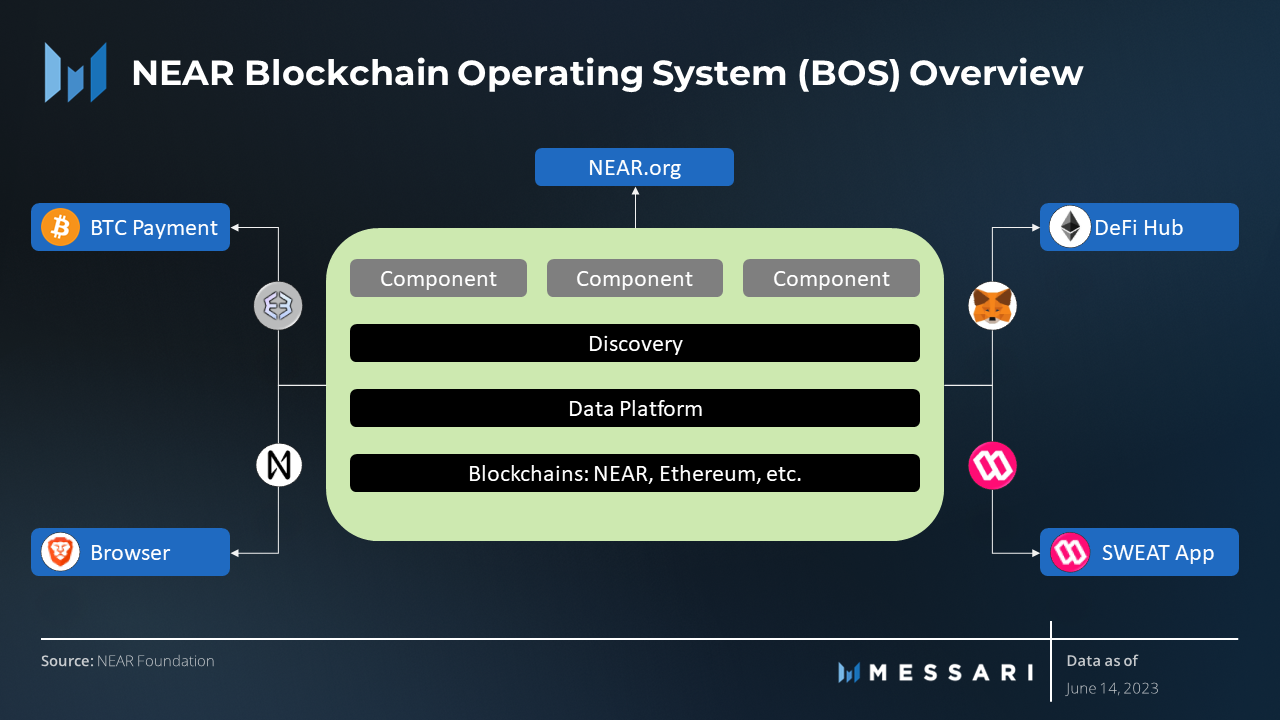
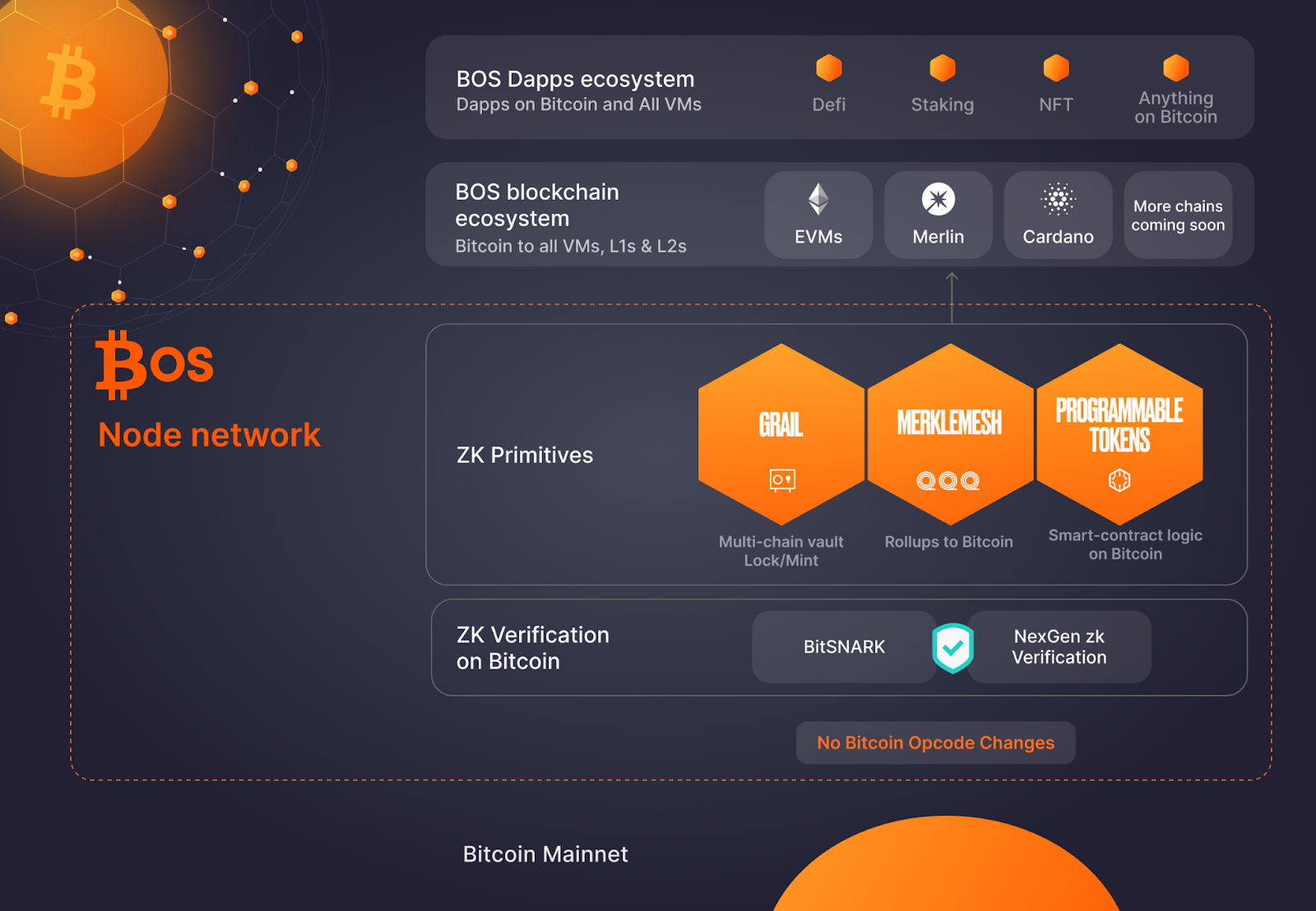
The term "near bos crypto infrastructure" often confuses newcomers because it blends two distinct concepts: the NEAR Protocol blockchain and the broader decentralized physical infrastructure (DePIN) network that includes nodes and data centers. NEAR does not have a single "BOS" blockchain. Instead, BOS (Blockchain Operating System) is a framework within the NEAR ecosystem designed to make building and deploying applications easier, particularly for AI agents and decentralized services.
Think of BOS as the operating system layer that sits on top of the NEAR blockchain. It provides the tools, libraries, and standards developers need to create "BOS apps" without starting from scratch. This is distinct from the underlying NEAR chain, which handles consensus, security, and state storage. The infrastructure constraint often cited by users stems from this separation: you need to understand both the base layer (NEAR) and the application layer (BOS) to fully grasp how the system works.
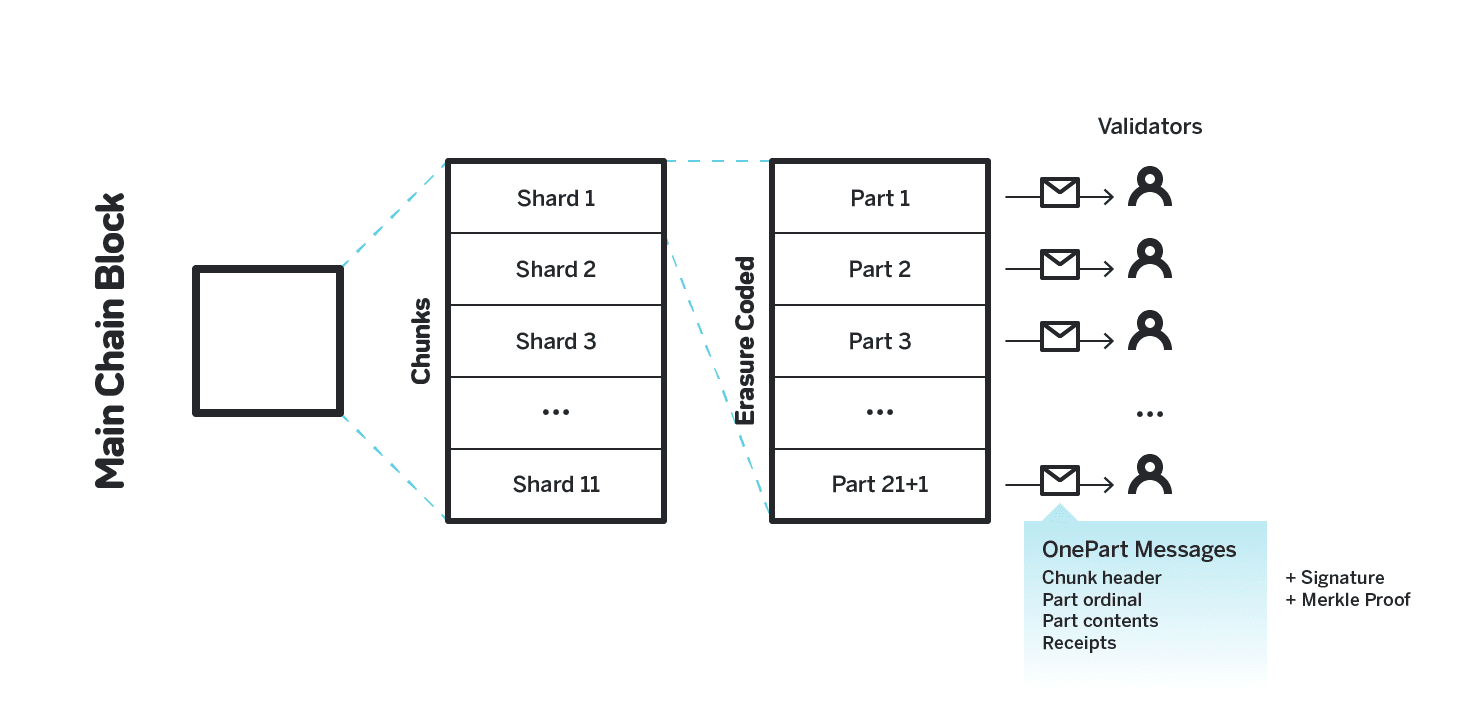
For investors and developers, this means the value proposition is tied to NEAR's ability to support high-throughput, AI-native workloads. The protocol's sharded architecture allows it to scale, but the real utility comes from how BOS simplifies the deployment of complex agents. When evaluating "near bos crypto infrastructure," focus on the synergy between NEAR's consensus mechanism and BOS's developer tools, rather than treating them as separate entities.
Bos crypto infrastructure choices that change the plan
When evaluating NEAR BOS (Blockchain Operating System) for 2026, you are weighing the flexibility of an open agent harness against the complexity of managing cross-chain execution. The infrastructure is designed to support AI-native applications, but this comes with specific technical and operational tradeoffs that developers and investors must understand.
The core value proposition lies in NEAR's ability to combine confidential settlement with private inference. This allows AI agents to operate on-chain without exposing sensitive data or model weights. However, this privacy layer introduces latency and computational overhead that standard smart contracts do not face.
Below is a comparison of the primary infrastructure components you need to evaluate.
| Component | Advantage | Tradeoff |
|---|---|---|
| Confidential Settlement | Protects AI model weights and user data | Higher gas costs for privacy proofs |
| Cross-Chain Execution | Enables multi-chain agent interoperability | Increased attack surface for bridge exploits |
| Agent Harness | Standardized SDK for AI agent deployment | Requires significant refactoring of legacy dApps |
| Sharded Architecture | High throughput for agent transactions | Complex state management for developers |
Privacy vs. Transparency
NEAR’s confidential settlement layer is a double-edged sword. For AI agents handling proprietary models or sensitive user data, it is essential. Yet, the cryptographic proofs required for verification slow down transaction finality. If your use case prioritizes speed over data secrecy, this layer adds unnecessary friction.
Interoperability Risks
Cross-chain execution allows agents to move value and data across different blockchains. This is powerful for creating complex AI ecosystems. However, each bridge introduces a potential vulnerability. Audits are critical, and the complexity of managing multiple chains can lead to operational errors that compromise security.
Developer Friction
The Agent Harness simplifies deployment for new AI-native projects. But for existing NEAR developers, adopting the BOS framework means rewriting core logic. This migration cost is a significant barrier to entry, potentially slowing down the ecosystem's growth in the short term.
Summary
The NEAR BOS infrastructure is built for the next generation of AI agents. It offers unique capabilities in privacy and cross-chain interaction. However, these features come with higher costs, complexity, and security risks. Evaluate these tradeoffs against your specific application needs before committing resources.
Choose the next step: Turn the research into a practical decision framework
NEAR Protocol is no longer just a general-purpose blockchain. It has evolved into a dedicated operating system for AI agents, combining cross-chain execution with confidential settlement and private inference. This shift creates a specific set of trade-offs for developers and investors weighing NEAR against other AI-native chains.
The decision to build or invest hinges on three concrete factors: the maturity of the agent harness, the cost of confidential computing, and the liquidity of the emerging agent marketplace.
Watchouts for misleading NEAR AI claims
As NEAR Protocol positions itself as the infrastructure layer for AI agents, the narrative around its capabilities has expanded rapidly. While the technical foundation is real, several common claims in the market require closer scrutiny. Investors and developers should distinguish between confirmed integration, speculative roadmap items, and marketing hyperbole.
The NVIDIA Partnership: Inception vs. Core
A frequent point of confusion is NEAR’s relationship with NVIDIA. NEAR Protocol joined NVIDIA’s Inception Program, which supports early-stage startups and developers building on NVIDIA’s AI technologies. This is an accelerator and support program, not a deep technical integration or a partnership that implies NVIDIA is building on NEAR. NEAR is leveraging NVIDIA’s hardware and software stacks for its own AI agent marketplace, but the two projects remain distinct entities with separate roadmaps and governance.
"AI-Native" vs. AI-Enabled
NEAR describes itself as "AI-native," a term that often gets stretched in marketing. The protocol has introduced features like Private Inference and the NEAR AI Agent Harness, which allow agents to operate with greater privacy and autonomy. However, the core blockchain remains a proof-of-stake ledger. It is not a specialized AI compute network like Render or Akash. Calling it "AI-native" reflects its strategic direction and tooling, not a fundamental change in its consensus or data storage mechanics.
The $100 Price Target
Discussions about NEAR coin reaching $100 are common in speculative communities. At current market caps and token supplies, a $100 price would imply a market capitalization exceeding $100 billion, assuming no massive token burns or supply reductions. While NEAR has strong fundamentals and growing adoption in the AI agent space, such a price target is not supported by current economic models or comparable valuations in the broader crypto market. Treat any price prediction above $10–$20 with extreme skepticism unless backed by a detailed, transparent financial model.
Confusion Over NEAR’s Blockchain Identity
Some newcomers ask if NEAR has its own blockchain. The answer is yes. NEAR is a public, layer-1 blockchain using sharding technology (Nightshade) to scale throughput. It is not a sidechain or a token on another network. Its native token, NEAR, is used for transaction fees and staking. Confusion sometimes arises because NEAR focuses heavily on interoperability and cross-chain execution, which can make its architecture seem abstract. However, it operates as an independent, sovereign blockchain.
Weak Options in the AI Agent Space
Not all AI agent projects on NEAR are equally viable. The NEAR AI Agent Marketplace is growing, but many agents are still in early stages with limited utility. Users and developers should evaluate agents based on real-world use cases, community activity, and transparent tokenomics rather than hype. The ecosystem is still maturing, and while the infrastructure is promising, the agent layer is subject to the same risks as any emerging technology sector.
Practical Checks for Investors
Before engaging with NEAR’s AI narrative, verify the source of claims. Look for technical documentation from near.org, official GitHub repositories, and verified announcements from partners. Avoid relying on social media speculation or unverified price predictions. The technology is real, but the market is often faster to exaggerate than to deliver.
No comments yet. Be the first to share your thoughts!