NEAR Protocol Infrastructure Overview
NEAR Protocol operates as a Layer-1 blockchain designed to handle the growing demands of decentralized applications and smart contracts. Its architecture focuses on scalability and user accessibility, distinguishing itself through the Blockchain Operating System (BOS). This concept moves beyond simple transaction processing, aiming to unify liquidity across multiple chains while keeping execution and inference confidential.
The BOS framework serves as the core differentiator, allowing developers to build applications that can interact seamlessly with various ecosystems. By abstracting away much of the complexity typically associated with cross-chain interactions, NEAR enables a more fluid experience for both creators and users. This structural approach supports the emerging "agent economy," where autonomous digital entities can operate efficiently within the network.
From a market perspective, NEAR’s position is defined by its ability to support high-throughput applications without sacrificing security. The protocol’s sharding mechanism, known as Nightshade, allows it to scale horizontally, ensuring that performance remains stable even as the network grows. This infrastructure foundation is critical for sustaining its relevance in a competitive landscape dominated by other high-performance Layer-1 solutions.
How the blockchain operating system works
NEAR BOS Crypto works best as a clear sequence: define the constraint, compare the realistic options, test the tradeoff, and choose the path with the fewest hidden costs. That order keeps the advice usable instead of decorative. After each step, pause long enough to check whether the recommendation still fits the reader's actual situation. If it depends on perfect timing, unusual access, or a best-case budget, include a simpler fallback.
The simplest way to use this section is to write down the real constraint first, compare each option against it, and choose the path that still works outside ideal conditions.
NEAR stack and agent economy integration
NEAR Protocol is positioning itself as the "Blockchain Operating System" (BOS), a structural shift designed to unify liquidity across 35+ chains while providing the infrastructure required for the emerging agent economy. This architecture addresses the fragmentation that has historically limited cross-chain utility, creating a single execution layer where AI agents can operate with minimal friction.
The core value proposition lies in NEAR's ability to keep execution and inference confidential. For AI agents, this means they can process sensitive data and execute complex transactions without exposing proprietary logic or user information to the public ledger. This confidentiality layer is essential for enterprise adoption, allowing agents to interact with financial markets or private databases securely.
By unifying liquidity, NEAR reduces the need for agents to bridge assets across disparate networks, which often incurs high fees and security risks. Instead, agents can access a consolidated pool of capital and compute resources. This simplification is critical for scaling decentralized applications, as it allows developers to build once and deploy across a multi-chain ecosystem without managing complex interoperability protocols.
This structural advantage is reflected in NEAR’s market performance. The following chart illustrates the recent price action of the NEAR token, which has responded to growing institutional interest in its agent-ready infrastructure.
NEAR's Infrastructure vs. Other Layer-1s
NEAR Protocol positions itself as a "Blockchain Operating System" (BOS), a term popularized by research firms like Messari to describe its approach to simplifying decentralized development. Unlike traditional Layer-1s that treat each chain as an isolated silo, NEAR’s architecture emphasizes composability and user-friendly onboarding. This structural choice aims to lower the barrier for developers building complex dApps and for users navigating multi-chain environments.
The competitive landscape is crowded, with Ethereum, Solana, and various Layer-2 solutions vying for developer mindshare. NEAR differentiates itself through its sharding technology (Nightshade), which allows for parallel transaction processing, and its focus on account abstraction. These features are designed to make the underlying infrastructure invisible to the end user, a stark contrast to the friction often experienced on other networks.
To understand where NEAR stands, it helps to compare its core infrastructure traits against other major protocols. The table below highlights key differences in consensus, scalability, and developer experience.
| Protocol | Consensus | Scaling | Dev Focus |
|---|---|---|---|
| NEAR | Nightshade Sharding | High throughput | Account Abstraction & BOS |
| Ethereum | Proof-of-Stake | Layer-2 Rollups | Security & Decentralization |
| Solana | Proof-of-History | High TPS native | Performance & Speed |
| Polkadot | Nominated PoS | Parachains | Interoperability |
While Ethereum remains the gold standard for security and liquidity, NEAR’s strategy is to capture the market of developers and users who prioritize ease of use and seamless cross-chain interactions. Its integration of AI-ready infrastructure also sets it apart in an increasingly data-centric Web3 landscape. For investors, this means NEAR is not just competing on raw speed, but on the usability and accessibility of its ecosystem.
Evaluating NEAR for portfolio allocation
Allocating capital to NEAR Protocol requires separating its technological moat from market sentiment. The NEAR BOS (Blockchain Operating System) is not just a layer-1 chain; it is an open infrastructure designed to unify liquidity across 35+ chains while keeping execution and inference confidential. This structural advantage positions NEAR uniquely in the agent economy, but it also introduces specific risks that require careful due diligence.
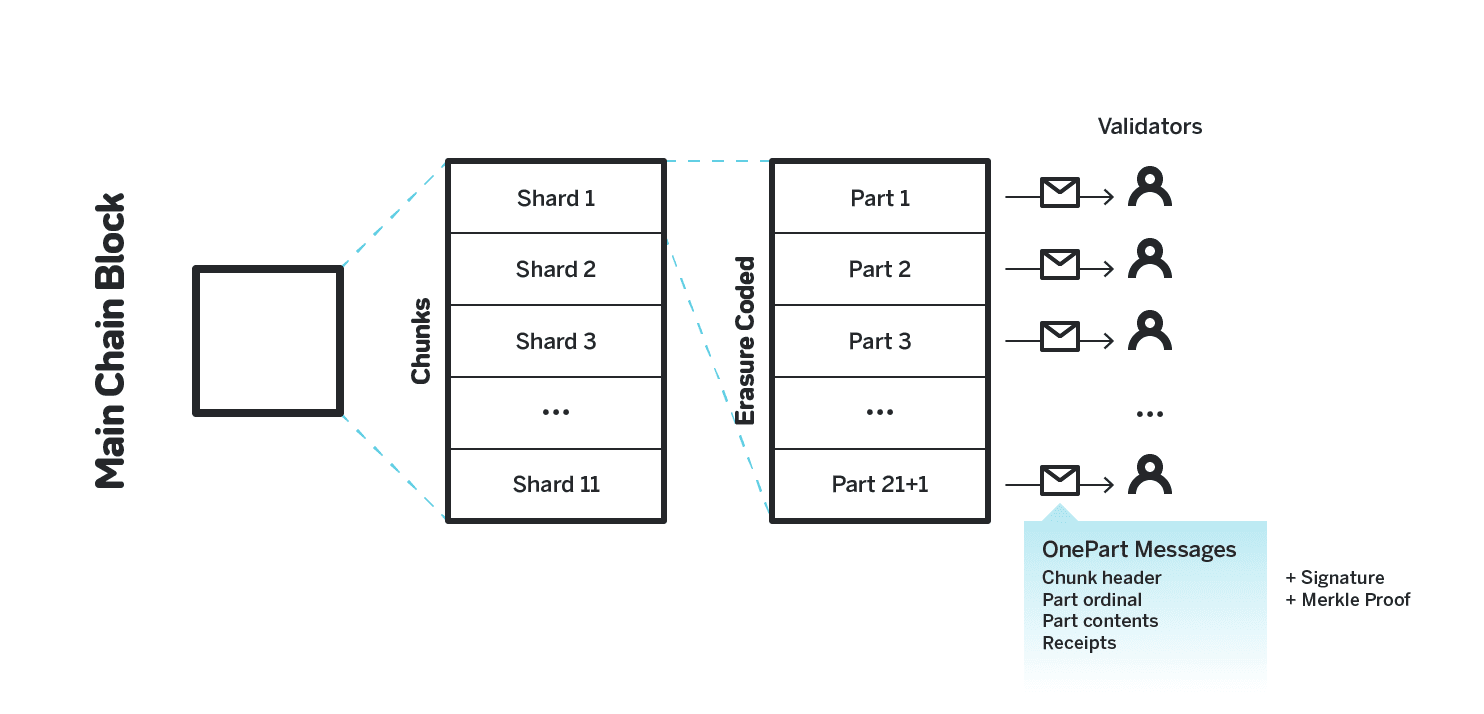
NEAR’s sharding architecture (Nightshade) allows for horizontal scaling, but the real differentiator is its focus on the agent economy. Evaluate how effectively NEAR unifies liquidity and maintains confidentiality for AI-driven applications. This isn't just about transaction speed; it's about whether developers are building complex, confidential agents on the network.
Look beyond total value locked (TVL). Focus on active addresses and developer activity related to the BOS ecosystem. High TVL with stagnant developer growth can signal a liquidity trap. The NEAR Foundation’s official reports and on-chain data should be your primary sources for verifying genuine adoption versus speculative holding.
NEAR operates in a high-stakes environment where regulatory clarity for AI-blockchain intersections is still emerging. Compare NEAR’s valuation against competitors in the AI-crypto space. If the market prices NEAR as a generic L1, it may be undervalued; if it prices it as a mature AI infrastructure play, the risk of correction increases. Use a TechnicalChart to identify support levels relative to these fundamental shifts.
No comments yet. Be the first to share your thoughts!