What is the NEAR Blockchain Operating System?
The NEAR Blockchain Operating System (BOS) is not just a frontend layer or a user interface wrapper. It is the unified infrastructure designed to power the agent economy. Think of NEAR BOS as the operating system that allows AI agents and humans to interact with decentralized applications seamlessly, much like how a computer OS manages hardware resources for software applications.
NEAR Protocol serves as the Layer-1 foundation for this ecosystem, providing the necessary scalability and security for smart contracts and dApps. However, the BOS elevates this by unifying liquidity across 35+ chains and keeping execution and inference confidential. This means that AI agents can operate with privacy and efficiency, while users experience a single, coherent interface regardless of the underlying blockchain complexity.
This infrastructure shift is critical for the next phase of crypto adoption. By treating NEAR as the currency of agents, the network supports a model where AI-driven tasks—such as data analysis, automated trading, or content generation—can execute transactions and interact with other protocols without human intervention. The result is a more dynamic and autonomous digital economy.
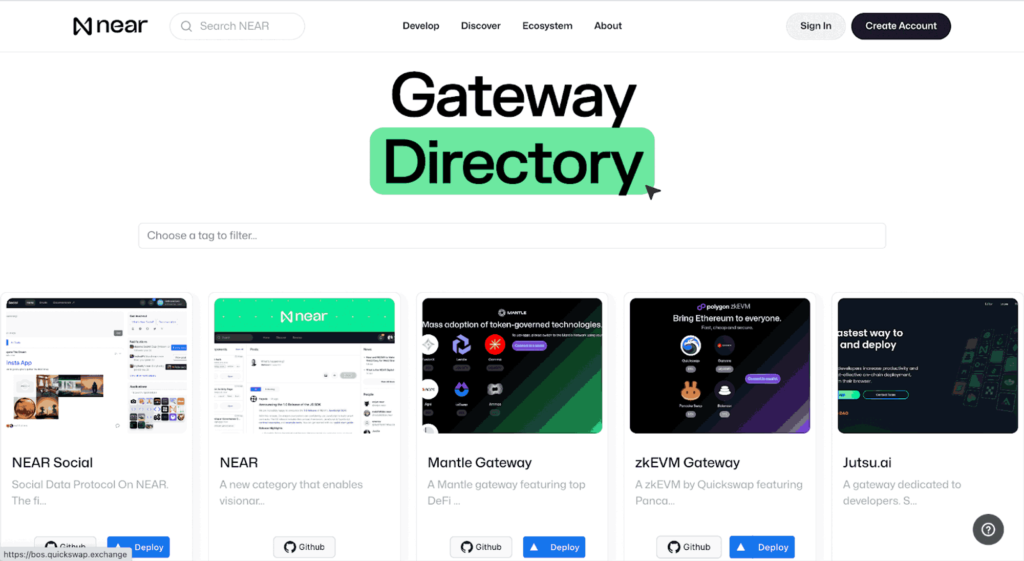
The NEAR BOS Crypto guide explores how this infrastructure supports builders who are creating the next generation of decentralized AI applications. By leveraging NEAR's sharding technology and user-friendly onboarding, developers can focus on building intelligent agents rather than solving basic blockchain interoperability issues. This approach positions NEAR as a key player in the convergence of artificial intelligence and blockchain technology.
how bos unifies cross chain liquidity
NEAR BOS Crypto issues are easier to solve when you separate the symptom from the device itself. A frozen touchscreen, a blank display, broken Bluetooth, and a slow map update can feel like the same failure, but they point to different causes. Write down what still works, what stopped responding, and whether the problem appears after startup, after a software update, or only after pairing a phone. Do the first pass while the car or device is parked, powered normally, and connected to a stable signal. If only one app is frozen, close that path before treating the whole system as broken. If core controls, driver information, warning lights, or safety features are involved, stop treating it as a cosmetic infotainment issue and move to the official support path. This distinction keeps the reset from becoming a ritual. The goal is not to reboot repeatedly; it is to prove whether the fault is temporary software lag, a connection problem, outdated firmware, accessory interference, or something that needs service documentation.
The simplest way to use this section is to keep the setup small, verify each change, and record the stable configuration before adding optional accessories.
building composable frontends with bos
NEAR BOS Crypto works best as a clear sequence: define the constraint, compare the realistic options, test the tradeoff, and choose the path with the fewest hidden costs. That order keeps the advice usable instead of decorative. After each step, pause long enough to check whether the recommendation still fits the reader's actual situation. If it depends on perfect timing, unusual access, or a best-case budget, include a simpler fallback.
The Agent Economy and AI Integration
The NEAR BOS Crypto guide reveals a fundamental shift in how blockchain infrastructure supports artificial intelligence. NEAR is positioning itself as the open infrastructure for the agent economy, moving beyond simple transaction settlement to become the execution layer for autonomous digital actors. This pivot addresses a critical bottleneck: how to make AI agents secure, confidential, and economically viable at scale.
Traditional blockchains struggle with the computational intensity and data privacy requirements of AI workloads. NEAR solves this by unifying liquidity across 35+ chains while keeping execution and inference confidential. This architecture allows AI agents to operate autonomously without exposing sensitive data or relying on opaque centralized servers. The BOS simplifies decentralized development, enabling builders to create complex agent interactions that were previously too costly or complex to deploy.
This integration transforms NEAR from a mere layer-1 blockchain into a comprehensive operating system for AI-driven applications. As noted in recent analysis by Messari, NEAR’s approach to simplifying decentralized development is key to driving user adoption in the AI space. By providing a secure environment for autonomous economic actors, NEAR enables a new class of applications where AI agents can trade, interact, and collaborate with human users in real-time.
The convergence of AI and blockchain on NEAR creates a robust foundation for the next generation of decentralized applications. Builders can leverage the BOS to create agents that not only process information but also execute complex economic activities across a unified liquidity layer. This strategic focus on the agent economy positions NEAR as a critical infrastructure provider for the future of AI.
NEAR BOS Crypto Guide: Market Position and Builder Economics
NEAR Protocol has carved out a distinct niche in the Layer-1 landscape by positioning itself not just as a blockchain, but as a Blockchain Operating System (BOS). This architecture simplifies decentralized application development, addressing the fragmentation that often hinders user adoption. For builders, this means a streamlined path to deploying smart contracts that feel as intuitive as traditional web services.
The economic model favors high-throughput applications, particularly those in the AI and agent economy sectors. By leveraging Nightshade sharding, NEAR maintains low transaction costs and rapid finality, making it viable for micro-transactions and real-time data interactions that other networks struggle to support efficiently.
To understand how NEAR compares to other leading Layer-1 platforms, we can look at the core metrics that matter to developers: throughput, cost, and ecosystem focus.
| Network | Theoretical TPS | Avg. Tx Cost | Focus | Primary Focus |
|---|---|---|---|---|
| NEAR BOS | 100,000+ | <$0.01 | AI & Agent Economy | AI & Agent Economy |
| Ethereum | ~30 | $1-$20 | DeFi & Security | DeFi & Security |
| Solana | 65,000 | <$0.001 | High-Frequency Trading | High-Frequency Trading |
| Polygon | 10,000+ | <$0.01 | Enterprise & Scaling | Enterprise & Scaling |
This comparison highlights NEAR's competitive advantage in handling complex, data-heavy workloads. While networks like Ethereum prioritize security through decentralization, and Solana focuses on raw speed for trading, NEAR balances these needs with a specific emphasis on AI integration and developer ease-of-use.
Builder checklist for NEAR BOS adoption
Before committing to the NEAR BOS Crypto infrastructure, evaluate these three practical steps. This checklist helps you determine if the Blockchain Operating System aligns with your project’s technical requirements and economic goals.
Determine if your dApp requires autonomous agents. NEAR BOS excels at hosting AI agents that interact with smart contracts, making it ideal for projects where autonomous execution is central to the value proposition.
Check if your team values low-friction deployment. The BOS allows developers to deploy apps via IPFS without complex node management, significantly reducing the operational overhead compared to traditional blockchain infrastructure.
Confirm your project benefits from NEAR’s sharding and user onboarding tools. If your strategy relies on seamless fiat on-ramps and high-throughput transactions, the underlying NEAR Protocol provides the necessary scale.
No comments yet. Be the first to share your thoughts!