Bos crypto limits to account for
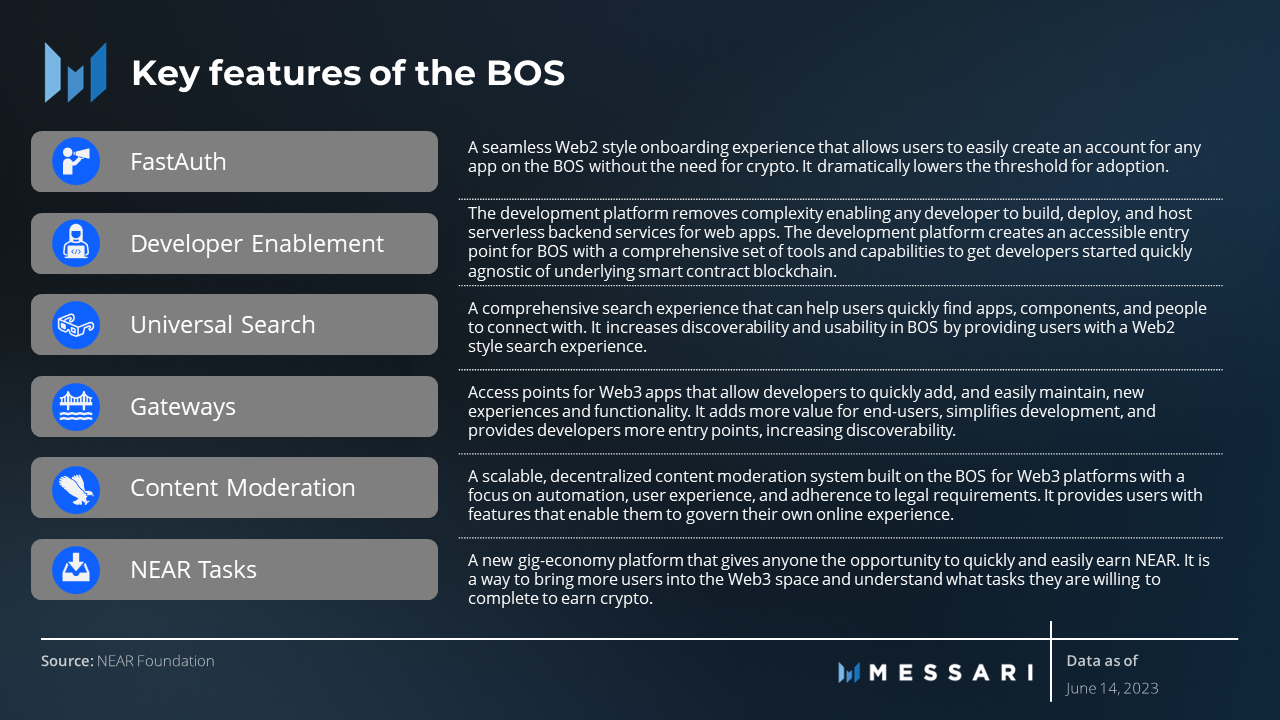
The BOS operates as a layer on top of the NEAR Protocol, functioning less like a traditional blockchain and more like a decentralized web server. Instead of executing smart contracts for financial transactions, it stores and serves frontend code. This distinction is critical for understanding the "Bos crypto" narrative, as the value proposition shifts from transactional throughput to content delivery and user experience.
This architecture allows developers to deploy applications directly to the blockchain without managing separate hosting infrastructure. The BOS acts as a gateway for the open web, enabling users to discover and interact with decentralized applications without the friction of traditional wallet setups or complex gas fee management for simple actions. It essentially decouples the frontend experience from the backend settlement layer.
While the NEAR Protocol handles the consensus and data availability, the BOS focuses on the presentation layer. This separation allows for faster iteration on user interfaces and easier integration of existing web technologies. For investors and developers, it represents a shift toward making blockchain interactions feel like standard web browsing, lowering the barrier to entry for mainstream adoption.
Bos crypto choices that change the plan
Use this section to make the NEAR BOS Crypto decision easier to compare in real life, not just on paper. Start with the reader's actual constraint, then separate must-have requirements from details that are merely nice to have. A practical choice should survive normal use, maintenance, timing, and budget. If a recommendation only works in an ideal situation, call that out plainly and give the reader a fallback path.
| Factor | What to check | Why it matters |
|---|---|---|
| Fit | Match the option to the primary use case. | A good deal still fails if it does not fit the job. |
| Condition | Verify age, wear, and service history. | |
| Cost | Compare purchase price with likely upkeep. | The cheapest option is not always the lowest-cost option. |
How to choose the right NEAR BOS project
The NEAR Blockchain Operating System (BOS) has turned NEAR into a hub for open-web experiences, but it also creates noise. With dozens of apps launching on the BOS layer, picking the right one requires a practical filter rather than hype. This framework helps you separate functional tools from empty shells.
Before interacting with any app, check if it runs on a verified NEAR contract. The BOS acts as a frontend layer; the real value lives in the smart contract logic. Use the NEAR Explorer to confirm the contract address matches the project’s official documentation. If the contract is unverified or anonymous, treat it as high-risk.
Active development is the strongest signal of longevity. Look for recent commits on GitHub or regular updates in the project’s Discord or Telegram. Projects with stagnant codebases often fail to adapt to NEAR’s sharding upgrades or Aurora EVM integrations. A healthy project shows consistent bug fixes and feature additions, not just marketing posts.

Not every BOS app requires a token. Distinguish between governance tokens and utility tokens. If a token is only for voting, its value may be limited. If it powers the core functionality—such as paying for storage, staking, or accessing premium features—it has a clearer economic model. Avoid projects that rely solely on speculative token sales without a working product.
Check real user feedback on X (formerly Twitter) or Reddit, not just paid influencers. Look for complaints about bugs, hidden fees, or poor customer support. A large, engaged community that discusses technical details is more valuable than one that only posts price predictions. Be wary of projects with sudden spikes in social mentions but no corresponding on-chain activity.


As an Amazon Associate, we may earn from qualifying purchases.
By following these steps, you reduce exposure to scams and focus on projects with real utility. The BOS is evolving rapidly, so prioritize security and active development over short-term price movements.
Watchouts for NEAR BOS Projects
NEAR BOS (Blockchain Operating System) lowers the barrier to entry for builders, but it also floods the ecosystem with low-effort or misleading projects. Before interacting with any BOS app, you need to distinguish between genuine utility and speculative noise. The open nature of BOS means anyone can deploy a front-end that looks legitimate without having a robust underlying protocol or sustainable tokenomics.
Weak Options and Misleading Claims
Many BOS projects overpromise on "Open Web" utility while offering little more than a basic wallet interface or a copy-pasted NFT gallery. Be wary of projects that claim to solve scalability issues without explaining their technical architecture. If a project relies solely on NEAR's speed without adding unique value, it is likely a short-term play rather than a sustainable product. Always check if the project has a clear revenue model or active developer contributions beyond the initial launch.
Common Mistakes by New Users
New users often mistake high transaction volume for project health. A BOS app might show high activity due to airdrop farming or bot trading, which does not reflect genuine user engagement. Additionally, some projects use complex tokenomics to obscure their true value proposition. Always verify the smart contract address on the official NEAR Explorer and read the project's whitepaper or documentation. If the team is anonymous or the code is not open-source, treat the project as high-risk.
How to Evaluate BOS Projects
Focus on projects with transparent teams, clear use cases, and active communities. Look for integrations with other established protocols on NEAR, such as Aurora or Ref Finance, which can indicate legitimacy. Avoid projects that pressure you to invest quickly or promise guaranteed returns. Remember that the BOS is a tool for innovation, not a guarantee of profit. Conduct your own research (DYOR) and never invest more than you can afford to lose.
Near bos crypto: practical: what to check next
Before committing capital or building on NEAR, it helps to separate technical mechanics from market speculation. The BOS is not just a wallet; it is a front-end layer that changes how users interact with the chain. Understanding the underlying tech and realistic price drivers is essential for any serious evaluation.
No comments yet. Be the first to share your thoughts!