What the NEAR BOS Actually Is
The NEAR Blockchain Operating System (BOS) represents a distinct category of infrastructure that bridges the gap between frontend discovery and blockchain execution. Unlike generic Layer-1 blockchains that focus primarily on transaction throughput or smart contract compatibility, the BOS provides a unified layer for browsing and discovering open web experiences. It functions as a common interface, allowing users to navigate decentralized applications (dApps) with the same ease they use traditional web browsers.
At its core, the BOS is an evolution of NEAR’s architecture, designed to solve the fragmentation problem in Web3. All frontend code is stored directly on the NEAR blockchain, with files uploaded to a decentralized storage system. This means the frontend is not hosted on centralized servers like AWS or Vercel, but exists as part of the blockchain itself. By treating frontends as first-class citizens on-chain, the BOS ensures that dApps are resilient, censorship-resistant, and instantly accessible without complex wallet setups or gas fees for users.
This approach shifts the paradigm from isolated dApps to an interconnected ecosystem. Developers can build widgets and components that are reusable across different applications, creating a modular web experience. For users, this means a seamless entry point into the crypto world where they can interact with various protocols without leaving a consistent interface. The system effectively acts as the operating system for the open web, providing the necessary tools and structure for both developers to build and users to explore decentralized services.
By unifying the frontend and backend under one roof, NEAR is building an infrastructure that prioritizes utility and accessibility. This distinction sets it apart from other Layer-1s that often leave frontend development to third parties, leading to a disjointed user experience. The BOS aims to make blockchain technology invisible to the end-user, allowing them to focus on the applications and services rather than the underlying complexity.
How the NEAR BOS Works
The NEAR BOS is not just a frontend layer; it is a protocol for discovering and composing open web experiences. Think of it as a modular toolkit that allows developers to build decentralized applications (dApps) that function as seamlessly as traditional websites, while remaining fully verifiable on the blockchain. This architecture shifts the focus from speculative tokens to actual infrastructure utility, enabling a composable web where components can be reused and shared.
Gateways: The Access Layer
Gateways serve as the entry points for users and developers to interact with the BOS. They handle the routing of requests, ensuring that users can access decentralized frontends without needing to manage complex blockchain nodes locally. By abstracting away the underlying complexity, gateways make it possible for anyone to browse and interact with BOS-powered applications using standard web browsers. This layer ensures that the user experience remains fast and familiar, hiding the distributed nature of the backend.
Components: Reusable Building Blocks
At the heart of the BOS are components: small, self-contained units of code and data that can be shared across different applications. These components are stored on-chain, making them permanent, transparent, and composable. Developers can pick and choose from a library of existing components to build new dApps, similar to how web developers use HTML elements or JavaScript libraries. This modularity reduces development time and encourages innovation, as builders can focus on unique features rather than reinventing basic functionality.
Blockchains: The Verification Layer
The blockchain layer provides the security and verification for the entire system. Every component and interaction is recorded on the NEAR blockchain, ensuring that the state of the application is consistent and tamper-proof. This decentralized ledger allows for trustless verification, meaning users can be confident that the data they see is accurate and has not been altered by a central authority. The integration of smart contracts and data storage on NEAR’s high-throughput network ensures that the system remains scalable and efficient as it grows.
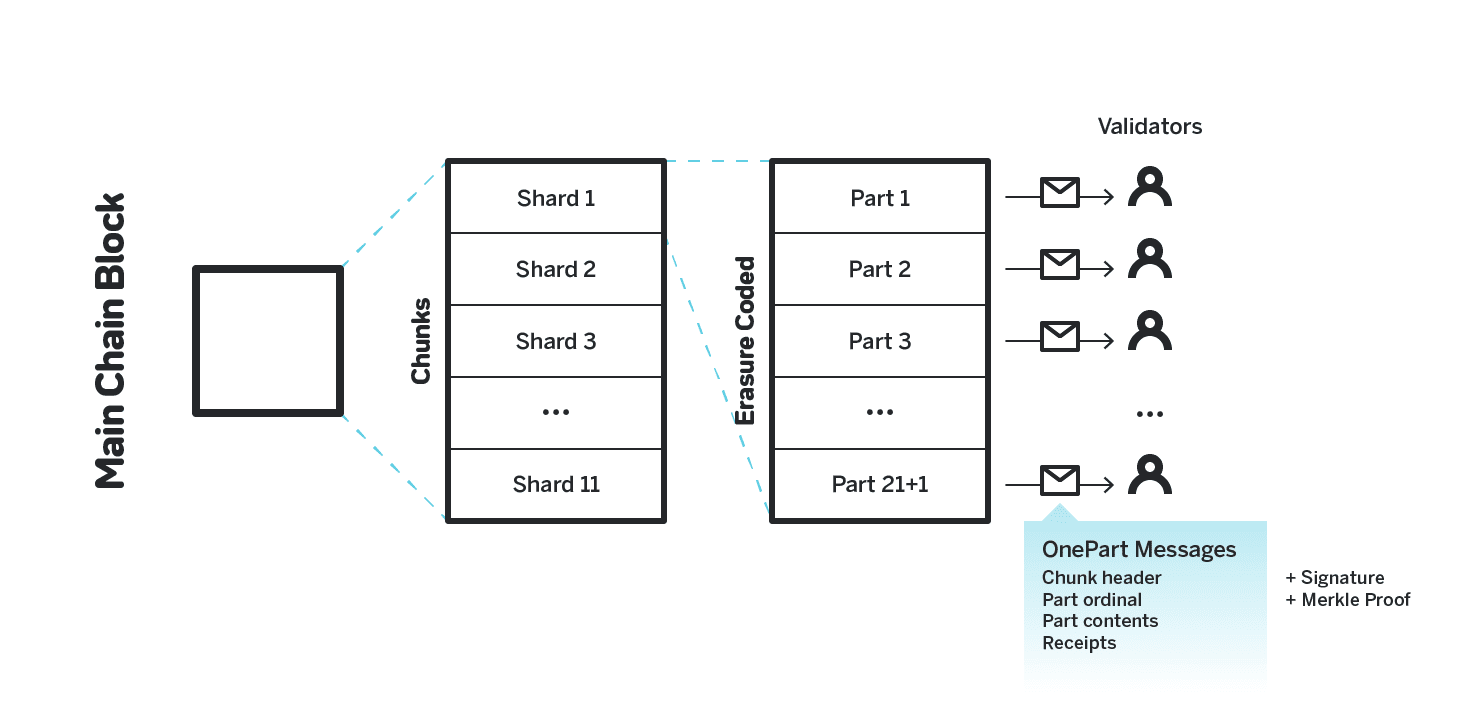
By combining these three pillars, the NEAR BOS creates a robust infrastructure for the open web. It allows developers to build powerful, decentralized applications that are accessible to everyone, while maintaining the security and transparency inherent in blockchain technology. This approach not only simplifies development but also paves the way for a more interconnected and user-centric web3 ecosystem.
Composable Frontends and Developer Strategy
NEAR’s Blockchain Operating System changes how developers think about the user interface. Instead of treating the frontend as a separate, fragile layer that lives on centralized servers, BOS stores code directly on-chain. This shift turns the frontend into a composable asset, allowing developers to build multi-chain applications using reusable components.
Think of the BOS like a set of digital Lego blocks. Developers don't need to write every piece of code from scratch. They can pull existing widgets—like social feeds, wallet connectors, or NFT galleries—and snap them together to create complex applications. This modularity drastically reduces friction. If a developer wants to add a new feature, they often just need to import a pre-built component rather than engineering a new backend integration.
This architecture also simplifies user onboarding. Because the frontend logic is part of the blockchain itself, applications can feel more native and responsive. Users can interact with different dApps without constantly switching contexts or dealing with disjointed experiences. The result is a smoother path from first click to active user.
The technical advantage here is consistency. When code is stored on the NEAR blockchain, it is immutable and transparent. Developers can trust that the components they are using haven't been tampered with. This reliability is crucial for building trust with users who are new to the space.
By focusing on composable frontends, NEAR is addressing one of the biggest hurdles in crypto adoption: complexity. When building an app feels like assembling pre-tested blocks rather than laying individual bricks, more developers can enter the space. This lowers the barrier to entry and accelerates the creation of user-friendly applications.
Autonomous Agents and Market Research
The rise of autonomous agents is reshaping how crypto markets operate, but these AI-driven tools face a persistent connectivity problem. Most agents struggle to interact with decentralized applications because existing blockchains are siloed monoliths. They require complex, custom code to read data or execute trades, creating friction that slows down decision-making and increases failure rates.
NEAR BOS solves this by treating the blockchain as a modular operating system rather than a static ledger. As Messari notes, BOS simplifies decentralized development by allowing developers to compose dApps from reusable components. This architecture enables autonomous agents to plug into a unified open web infrastructure, interacting with multiple protocols as easily as a user clicks a button.
For market research, this composability is critical. Agents can now aggregate data, execute trades, and manage assets across different chains without relying on fragile, centralized APIs. This shifts the focus from speculative hype to practical infrastructure utility, where the value lies in the seamless integration of AI logic with on-chain reality.
| Feature | Traditional Monolithic Stack | NEAR BOS Composable Stack |
|---|---|---|
| Agent Integration | Custom, fragile API connections | Plug-and-play reusable components |
| Data Access | Siloed, single-chain limited | Unified, cross-chain composable |
| Development Speed | Months per integration | Days per integration |
| Reliability | High maintenance overhead | Standardized, robust interfaces |
NEAR BOS crypto analysis: Investment outlook
The investment case for NEAR Protocol rests less on speculative price targets and more on its position as a foundational layer for the open web. Rather than viewing NEAR solely as a token to trade, it is more accurate to analyze it as infrastructure utility. The network’s transition toward a "Blockchain Operating System" (BOS) provides a clear metric for adoption: developer activity and dApp deployment velocity.
Official sources indicate that NEAR’s sharding architecture allows it to scale horizontally, handling thousands of transactions per second without the congestion that plagues older Layer-1 networks. This technical capability is the primary driver of its long-term value. When developers build on NEAR, they are not just writing code; they are leveraging a pre-built environment that abstracts away complexity. This reduces the barrier to entry for mainstream applications, from gaming to social media, creating a sticky ecosystem that benefits the NEAR token through increased demand for block space and staking.
To track this utility, investors should monitor on-chain metrics such as daily active addresses and total value locked (TVL) rather than short-term volatility. The BOS framework simplifies account abstraction, making blockchain interactions feel like traditional web experiences. As more user-friendly applications launch on NEAR, the network’s relevance in the broader crypto landscape solidifies. This is a long-term infrastructure play, where value accrues to those who stake and secure the network as usage grows.
For readers interested in securing their NEAR assets while exploring this infrastructure, the following tools are essential for maintaining control over your keys.


As an Amazon Associate, we may earn from qualifying purchases.
Common questions about NEAR BOS
The Blockchain Operating System (BOS) redefines how we interact with decentralized applications, shifting focus from isolated ecosystems to an open, interoperable web. Understanding its structure helps clarify why NEAR is positioning itself as infrastructure rather than just another Layer-1 blockchain.
No comments yet. Be the first to share your thoughts!